

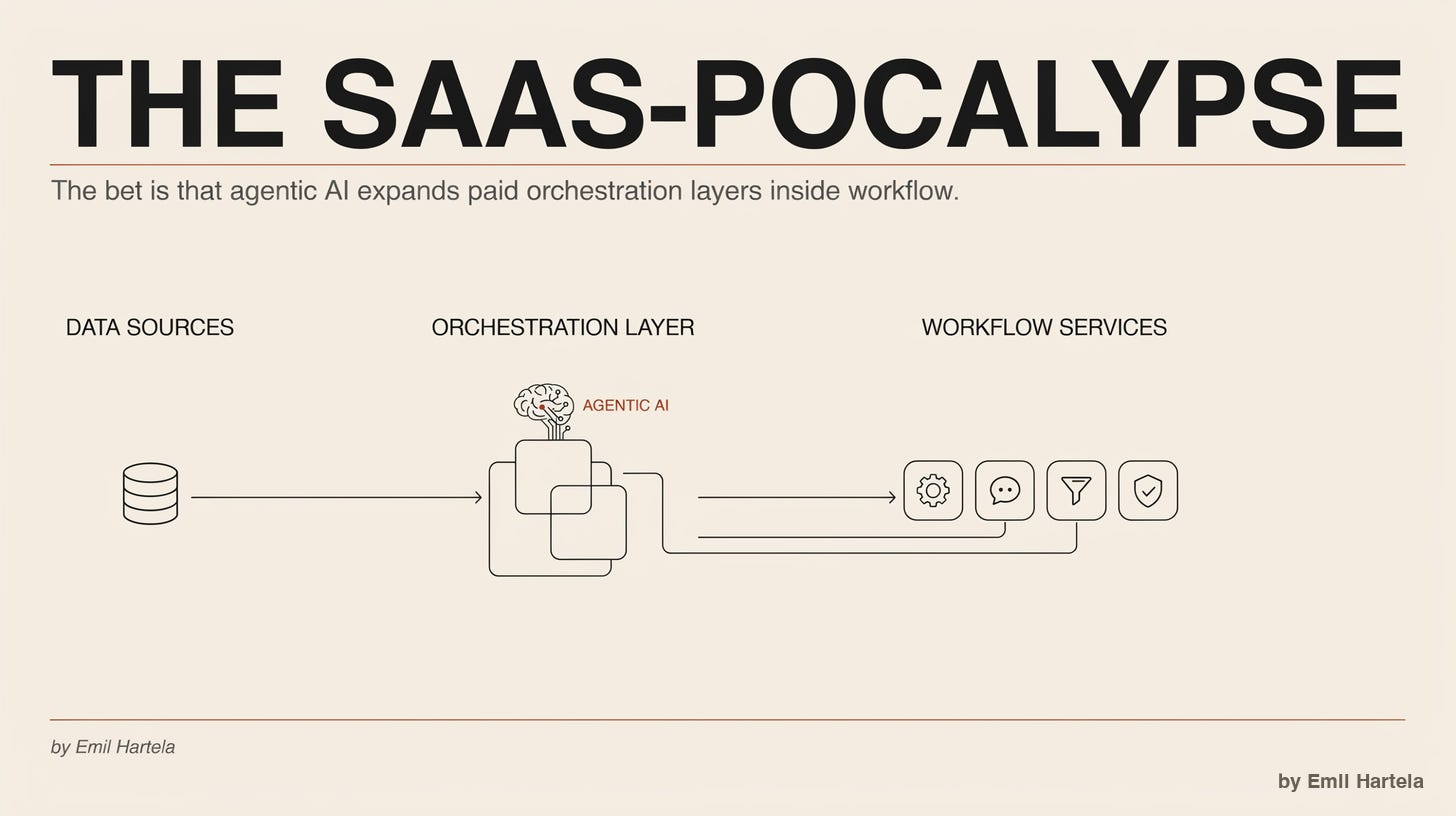
Software is peeling human judgment out of the daily work that used to require it. A finance close that once needed forty accountants now runs through four hundred agents that read ledgers, flag exceptions, and post entries overnight. The platform that gives those agents lasting identities, records every decision they make, and keeps their shared memory intact across months and reorganizations becomes the new center of gravity. That platform does not merely survive the change. It absorbs more value per process than the old seat model ever captured.
The mechanics are straightforward once the jargon is stripped away. Agents cannot operate in a vacuum. They need permissions that survive employee turnover, audit trails that regulators can follow, and a single source of truth that does not reset every time a new model appears. The company that already owns those controls inside an enterprise gains a structural advantage. New point solutions must fight for access; the existing orchestration layer simply extends its reach.
Historical precedent shows the pattern. When Adobe replaced perpetual licenses with Creative Cloud subscriptions, revenue climbed from $4.4 billion to $19.4 billion while recurring revenue crossed 90 percent. The model did not weaken. It became stickier because the customer’s work now lived inside a persistent environment. Microsoft’s move from on-premise servers to Azure produced the same outcome: a $75 billion run rate at 39 percent growth even as legacy server revenue declined. Incumbents that control the environment where work happens tend to expand total value rather than lose it.
Genesys offers another concrete parallel. Its PureCloud platform migrated contact-center customers from on-premise licenses to cloud delivery and recorded nearly 530 percent year-over-year revenue growth in the first three quarters after the shift, with customer wins rising 115 percent. The feared displacement never materialized because the new model concentrated governance and workflow execution inside one governed system. The same logic applies when agents replace seats: the layer that already enforces compliance and maintains context captures the expanded activity.
Consider what happens when the number of actors inside a system multiplies by an order of magnitude. An enterprise that once tracked a few hundred human users now tracks thousands of agents that each carry their own permissions, decision histories, and cross-references to other agents. The cost of fragmentation rises sharply. A single missed audit trail or conflicting memory state can invalidate an entire quarter of automated work. That requirement does not favor lightweight newcomers. It favors the systems already wired into the enterprise’s compliance fabric and data backbone. The shift therefore does not flatten value; it concentrates it where the rules and the records already live.
The feared collapse
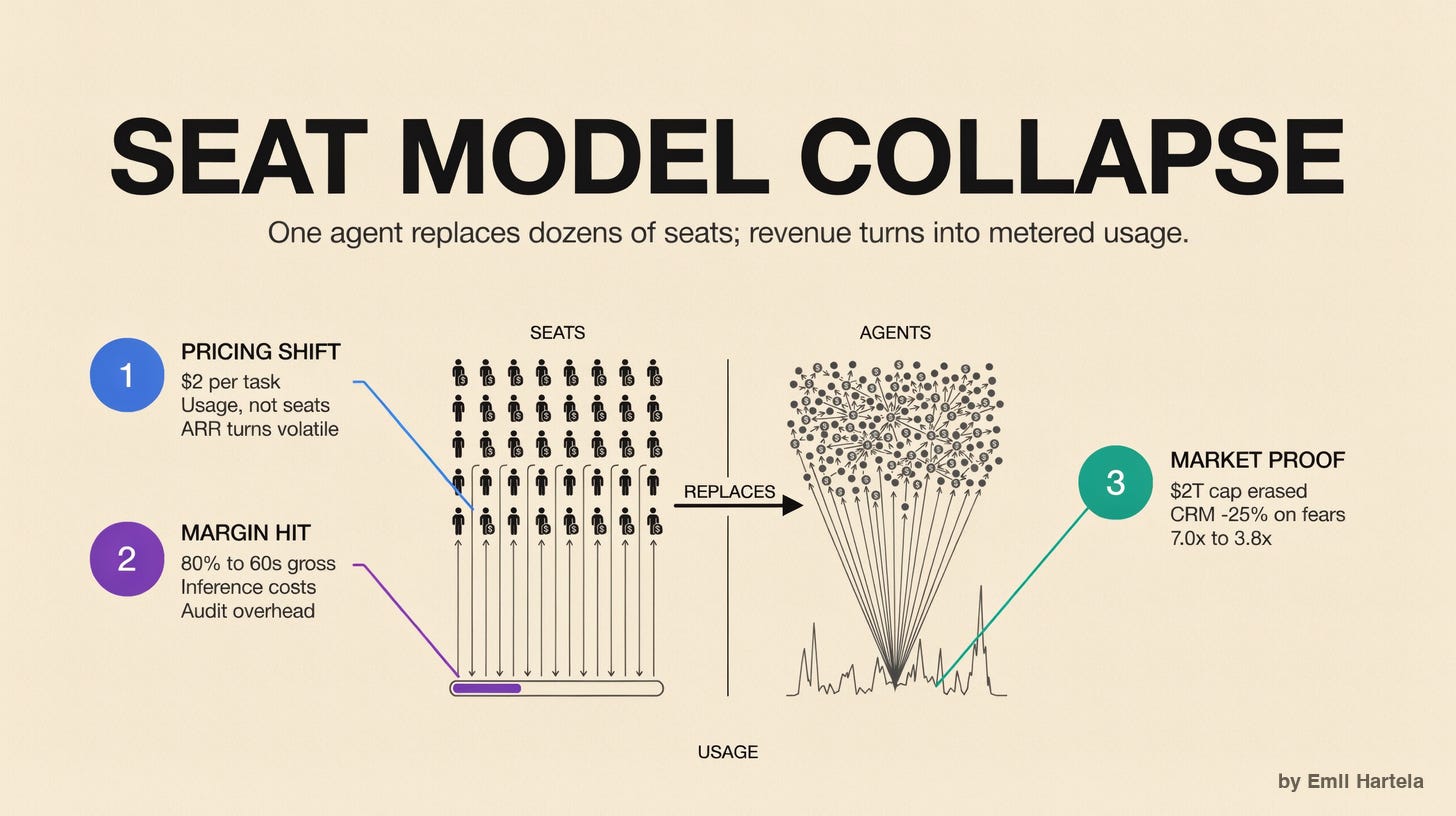
The bear case starts from a simple observation: one agent can replace dozens of licensed users. Seat-based ARR therefore looks fragile. If pricing shifts to $2 per conversation or $0.99 per resolved ticket, the predictable cash flow that justified high multiples disappears. Gross margins that sat at 78 to 82 percent could compress into the low sixties once inference and observability costs run through every workflow. The market has already acted on that fear.
Between January and February 2026 roughly $2 trillion in software market value vanished. Atlassian shares fell 35 percent after the company reported enterprise seat counts declining for the first time in its history. Salesforce dropped 28 percent on similar concerns. The SaaS Capital Index median ARR multiple compressed from 7.0x to 3.8x even though many companies continued to post double-digit revenue growth. Valuations now embed the assumption that the underlying business model itself is broken.
ServiceNow illustrates the dislocation cleanly. Subscription revenue grew 21 to 22 percent year over year, yet the stock halved from its 2025 peak. Investors priced the risk that agentic automation would erode the very workflows the platform monetizes. The narrative treats consumption pricing as inherently more volatile and less valuable than the seat model it replaces.
The same compression hit broader indices. The iShares Expanded Tech-Software ETF fell more than 21 percent year to date and roughly 30 percent from its September 2025 peak by March 2026, even as names such as Adobe continued reporting positive revenue growth. The selloff priced in model obsolescence rather than adaptation.
Salesforce revenue growth slowed to a consensus 9.6 percent for fiscal 2026 while the stock traded down more than 26 percent year to date and over 40 percent from its highs. Public SaaS companies reported AI-driven gross margin resets from the 78-82 percent range into the 60-70 percent band as inference, evaluation, and observability costs scaled with every automated workflow. The sector de-rating exceeded historical shocks even though fundamentals showed resilience in top-line expansion. The prevailing view treats these margin pressures and seat declines as terminal rather than transitional.
The orchestration layer
The same forces that threaten per-seat revenue strengthen the platforms that already manage identity, permissions, and memory. Agents do not roam freely inside large organizations. They are forced through controlled environments because the cost of mistakes is too high. Microsoft Entra Agent ID automatically assigns unique identities to agents built in Copilot Studio or Azure AI Foundry. ServiceNow’s Knowledge Graph and CSDM extensions give agents a shared, auditable view of enterprise processes. Once agents operate inside that layer, switching costs rise because the accumulated context and governance rules cannot be ported without recreating months or years of work.
Consumption pricing on top of these platforms expands revenue per workflow rather than shrinking it. Salesforce Agentforce reached $800 million in ARR, up 169 percent year over year, with 60 percent of bookings coming from existing customers expanding usage inside the CRM data layer. Intercom Fin hit nine-figure ARR at $0.99 per resolved ticket. Hybrid subscription-plus-usage models have shown 31 to 38 percent higher growth than pure subscription arrangements. The agent does more work, the platform records more activity, and the customer pays for outcomes rather than headcount.
The thought experiment clarifies the mechanism. Imagine an IT department that once managed 5,000 human seats and now manages 50,000 agents. Every agent must pass through the same permissions and memory layer to avoid compliance failures. That requirement concentrates value in the platform that already owns those controls. The alternative—scattered point solutions—creates audit gaps and version conflicts that enterprises will not tolerate. Data gravity therefore pulls agents inward, not outward.
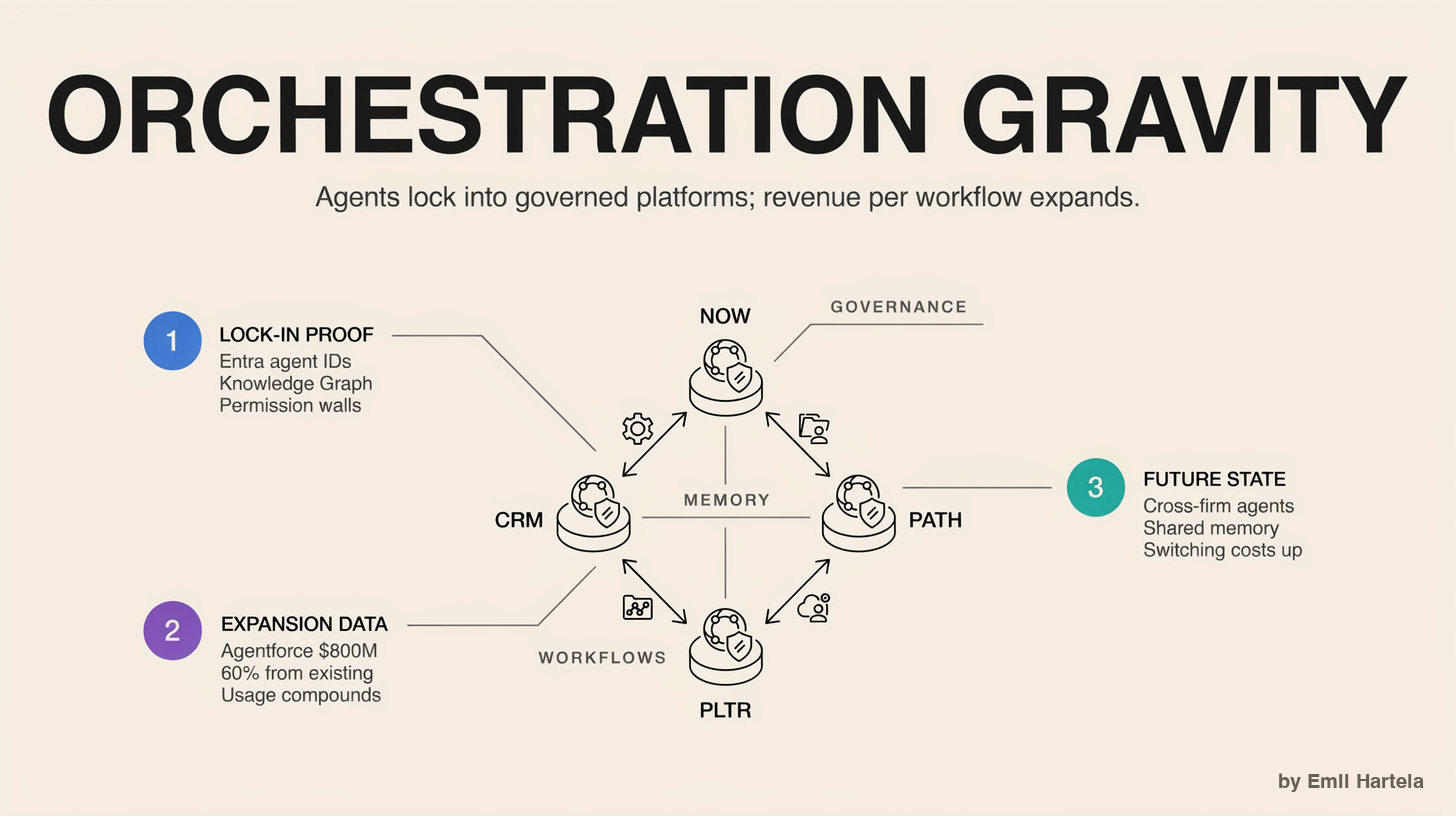
Adobe and Microsoft supply the historical parallel. Both faced the fear that their old models would collapse. Both absorbed the shift and grew total revenue substantially. The orchestration layer that survives does not merely replace seats; it becomes the place where the new volume of agent activity is governed and monetized. ServiceNow’s May 2025 AI Platform launch added an AI Agent Fabric for cross-vendor coordination with Microsoft, NVIDIA, Google, and Oracle, deepening the same gravitational pull inside one governed system. ServiceNow’s April 2025 Cisco partnership further embedded secure AI adoption at enterprise scale. The pattern repeats: governance requirements and integration depth turn the feared volume increase into a moat rather than a threat.
Here is the map
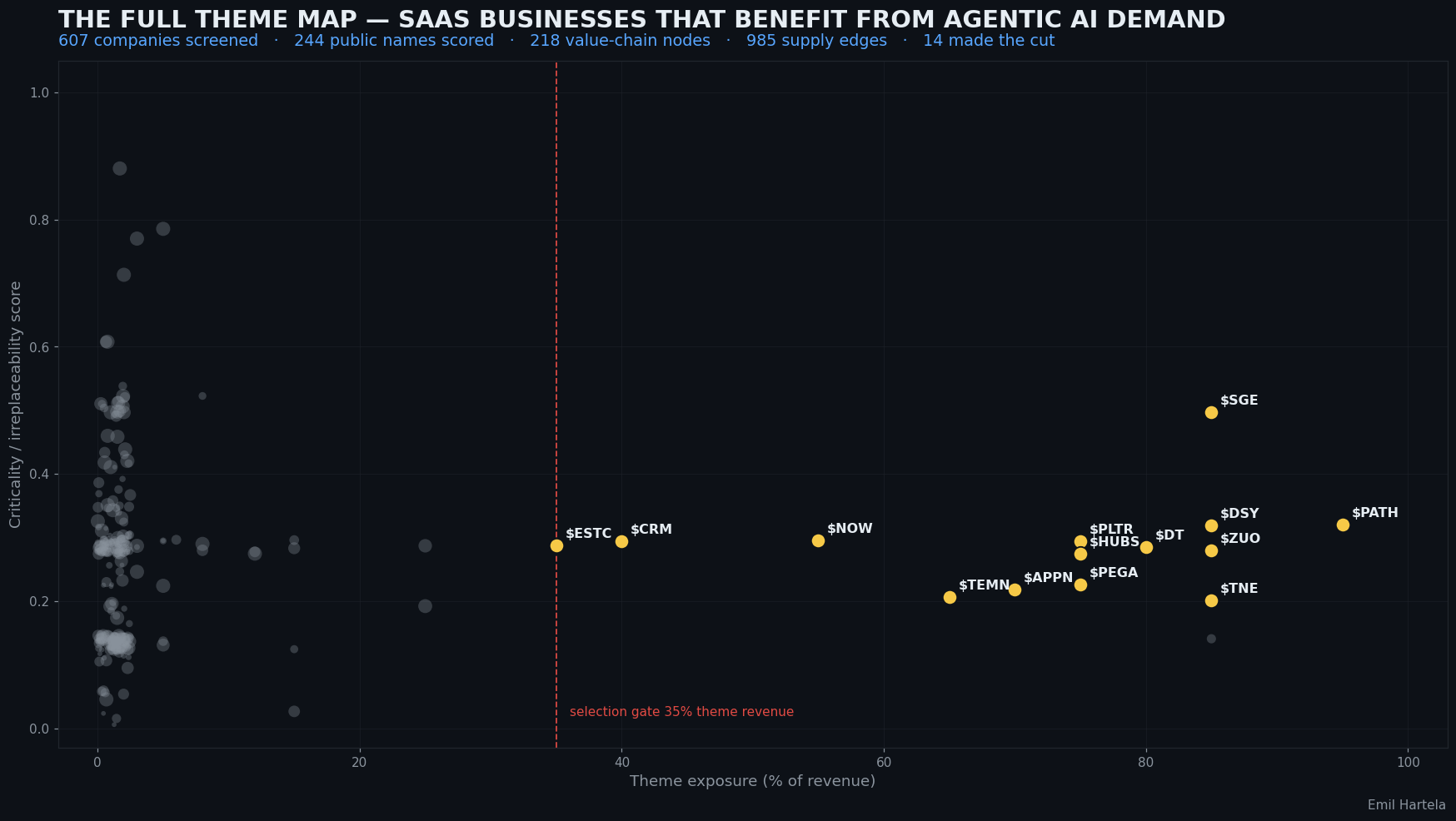
A quick word on where these names come from, because they are not cherry-picked. Before writing a word of this piece I mapped the entire theme: 607 companies screened across 218 value-chain nodes and 985 supplier-customer edges, with all 244 public names scored on theme exposure and criticality. Fourteen made the cut. The chart below is the whole field — the grey cloud is everything that touches the theme, and the gold dots past the gate are what survived.
The agent value chain breaks into four clusters. Workflow orchestration platforms embed and run teams of agents inside existing enterprise processes. Vertical process platforms add agentic capabilities to industry-specific data and compliance requirements. Billing and observability layers capture usage volume and monitor agent behavior at scale. Data and decision platforms supply the persistent memory and long-running logic that agents need to operate across time. Value pools where governance, memory, and workflow execution already intersect because those are the constraints that become more binding as agent counts rise.
Walmart’s experience with e-commerce offers a useful analogy for how the clusters interact. Traditional retailers feared pure online players would strip away margin. Instead, the companies that already controlled physical inventory, customer data, and fulfillment absorbed digital channels and grew omnichannel revenue. The same pattern appears here: the platforms that already sit at the intersection of workflow, compliance, and data capture the incremental agent activity rather than losing it to new entrants.
The four clusters are not interchangeable. Workflow orchestration carries the highest switching costs because agents inherit the process maps and exception rules already built inside the system. Vertical platforms add domain-specific barriers that general tools cannot replicate without recreating regulatory logic. Billing layers convert every additional agent action into a metered event. Data and decision layers supply the memory that prevents agents from hallucinating or losing context after reorganizations. The clusters reinforce one another: an agent that runs inside a governed workflow also generates billable events and requires durable memory. The company that owns two or more of these layers compounds the advantage.
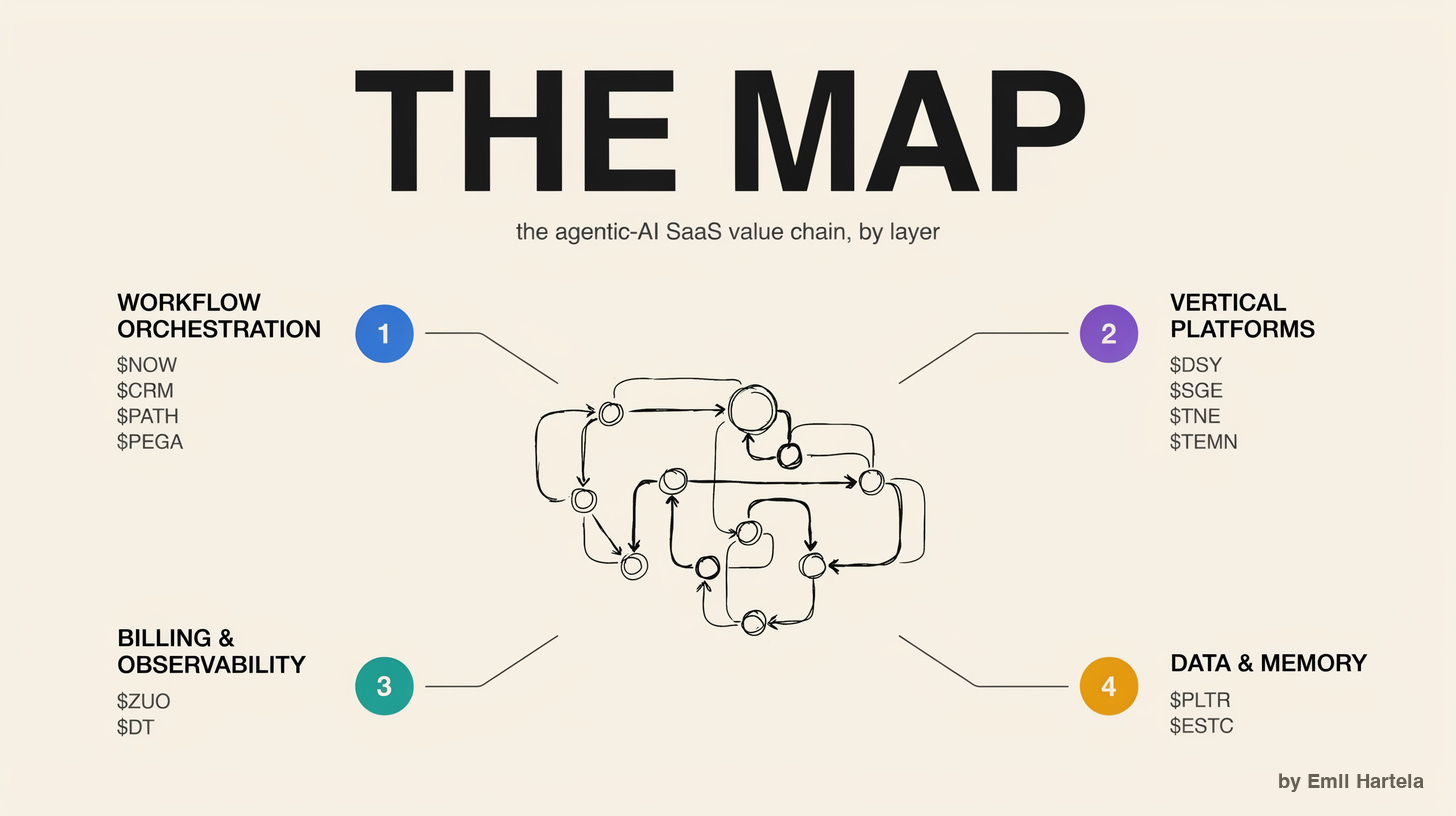
Workflow Orchestration Platforms
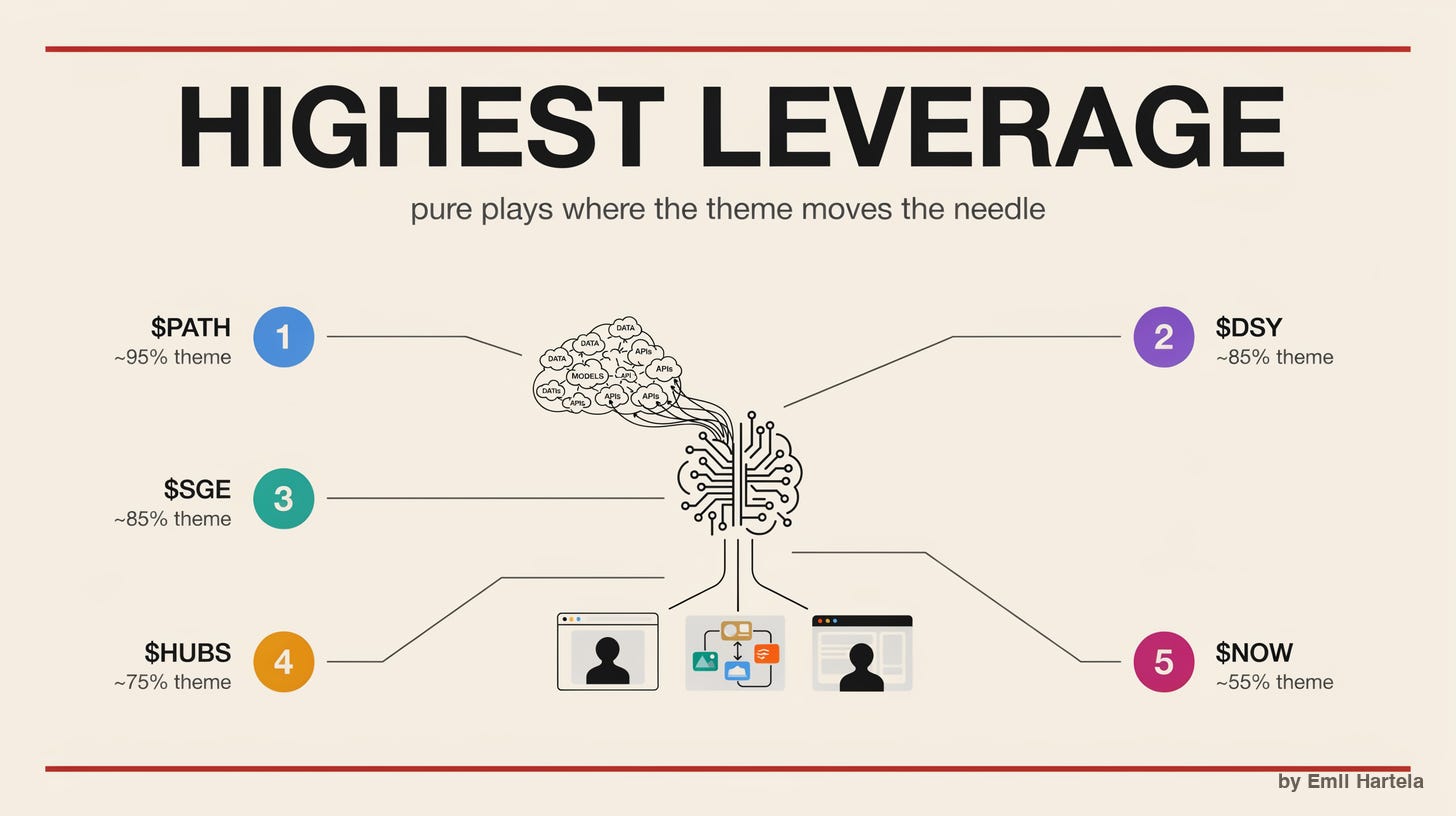
$NOW ServiceNow runs the workflows that IT, HR, and customer service organizations already use. Its platform now hosts pre-built teams of agents that execute inside the same governed environment. The consensus view treats the stock as exposed to seat erosion; the shares halved from the 2025 peak despite 21 to 22 percent subscription growth. What is actually happening is that governance mandates and the Knowledge Graph requirement force agents into ServiceNow’s orchestration layer rather than allowing them to operate independently. Switching costs rise because the accumulated process context and audit trails sit inside one system. The business profile strengthens.
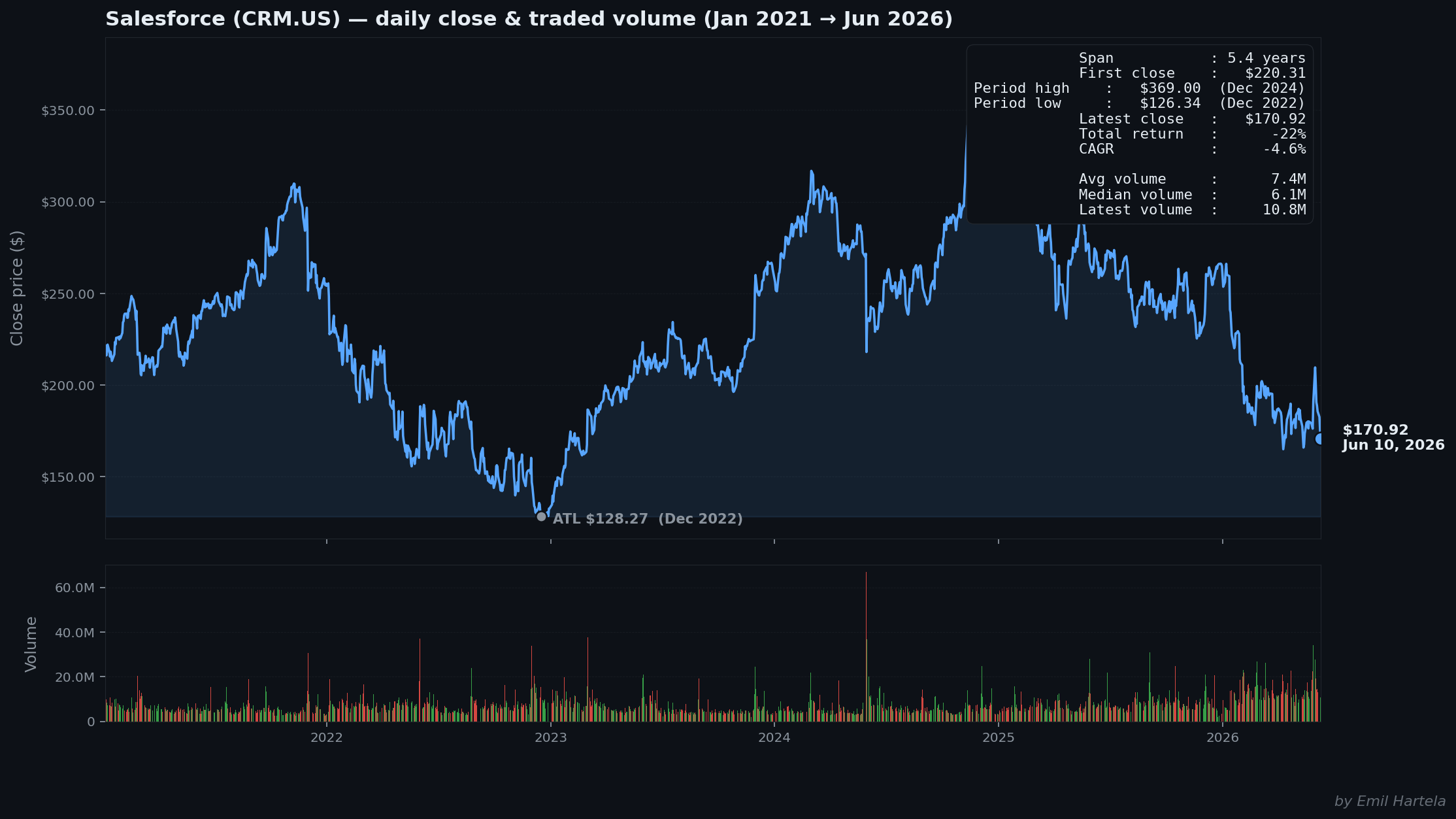
$CRM Salesforce positions Agentforce as the operating system for agentic work on top of its CRM data. The street narrative sees slowing core growth offset by AI monetization hopes, with the stock well below 2025 peaks. The concrete development is that Agentforce ARR reached $800 million with 60 percent of new bookings from existing customers expanding inside the trusted data platform. Salesforce processed 19 trillion tokens and delivered 2.4 billion Agentic Work Units across Agentforce and Slack. Agents increase the volume of activity that must be recorded and governed; the platform that already owns the customer records captures that expansion. Pricing power moves from seats to outcomes without losing the data gravity that keeps customers inside.
$PATH UiPath converts its RPA foundation into the execution fabric for autonomous agents. Consensus views it as legacy automation threatened by newer AI tools. In practice, agents multiply the number of workflows that require reliable orchestration and auditability. The automation layer becomes the default runtime for those workflows, raising switching costs and platform value rather than eroding them. Enterprise deployments that once required separate tools now converge on a single governed runtime because compliance and exception handling cannot be fragmented.
$PEGA Pegasystems supplies low-code workflow and decisioning platforms used for CRM and ERP processes. The market narrative often treats it as a mature vendor in a crowded field. What the agentic shift actually does is embed decision agents directly into existing case management flows. Switching costs increase because the accumulated business rules and outcome histories live inside the platform; moving agents elsewhere requires rebuilding those rules from scratch. Barriers to entry rise because new entrants lack the production decisioning logic already tuned to regulated processes. The profile strengthens as agent volume scales inside the same low-code environment.
$HUBS HubSpot provides CRM and marketing automation to mid-market companies. The consensus frames the business around seat-based marketing and sales tools. In reality, its workflow automation directly supports agentic actions such as lead qualification and campaign orchestration. The platform that already owns customer data and campaign history becomes the natural home for agents that act on that data. Switching costs rise because agent actions inherit the existing lead scoring and nurture sequences. The business strengthens as agents increase the frequency and precision of those sequences without requiring new integrations.
Vertical Process Platforms
$DSY Dassault Systèmes supplies 3D and PLM environments where aerospace and automotive teams already model products. Agentic simulation and generative design agents now run inside the same model. Domain-specific data gravity intensifies because regulatory and engineering compliance rules are embedded in the platform; agents cannot bypass them without creating certification risk. The business strengthens as the volume of simulated work increases inside a single governed system.
$SGE Sage Group delivers accounting and HR software to small and mid-sized businesses. Agentic bookkeeping agents handle ledgers natively. SMB customers lack the resources to stitch together multiple point solutions, so the platform that already manages compliance and financial records absorbs the new agent activity. Switching costs remain high because the ledger history and regulatory filings sit inside one environment.
$TNE Technology One provides ERP systems to public-sector and higher-education institutions. Agentic workflow agents manage compliance processes that carry statutory requirements. The vertical specialization creates barriers that general platforms cannot easily replicate; agents must respect those rules or the output becomes unusable for audits. The profile improves as agent volume grows within the existing compliance layer. Removing this platform would stall agentic ERP rollouts at more than 200 institutions that rely on its specialized statutory controls.
$TEMN Temenos supplies core banking SaaS to tier-two banks. Its Infinity platform now includes agentic advisory and operations modules. The market narrative positions it as a traditional banking vendor. What actually occurs is that regulatory reporting and customer advisory rules are already codified inside the system. Agents that advise on accounts or execute operations must operate within those rules or produce outputs that fail audits. Switching costs therefore rise sharply; a new platform would require re-encoding decades of compliance logic. The business profile strengthens because agent volume increases inside a vertical moat that general orchestration layers cannot easily replicate.
$APPN Appian supplies low-code BPM platforms for enterprise process automation. Consensus views it as one of several BPM vendors. The agentic shift embeds agent orchestration directly into existing case and workflow engines. The platform that already owns process definitions and exception paths becomes the execution layer for agents that follow those paths. Barriers to entry increase because accumulated process knowledge cannot be ported without recreating the underlying logic. The profile strengthens as agent counts scale inside the same governed BPM environment.
Billing & Observability Layers
$ZUO Zuora operates the billing infrastructure that converts usage into revenue. Consumption pricing for agents directly increases the number of billable events the platform records. The consensus treats the company as niche subscription software. The reality is that hybrid models combining subscription with usage have already demonstrated 31 to 38 percent higher growth when agents replace seats. Pricing power moves in Zuora’s favor because every additional agent conversation becomes a metered transaction inside its system.
$DT Dynatrace supplies observability across enterprise stacks and has integrated explicit agentic monitoring capabilities. As agent counts rise, the volume of actions that must be tracked and explained increases. The platform that already sits inside existing monitoring workflows captures that incremental activity without requiring new integrations. The business strengthens because observability becomes a non-discretionary requirement rather than an optional add-on. Enterprises cannot tolerate unexplained agent decisions in regulated environments; the layer that already provides that visibility absorbs the new demand.
The interaction between billing and observability creates a reinforcing loop. Every agent action that generates a billable event also generates telemetry that must be explained. The company that owns both layers captures the full margin on both the usage and the explanation. New entrants would need to replicate both the metering engine and the monitoring fabric simultaneously, raising the capital and integration cost of displacement.
Data & Decision Platforms
$PLTR Palantir’s AIP platform runs persistent agents on enterprise data. The core value is long-running logic that maintains context across organizational changes. Agents require exactly this form of durable memory and decision auditability. The platform that already owns the data foundation becomes the place where those agents operate, raising barriers to substitution. The market narrative often frames the stock around government contracts, yet the same memory and decision layer applies directly to commercial agent deployments where context must survive reorganizations.
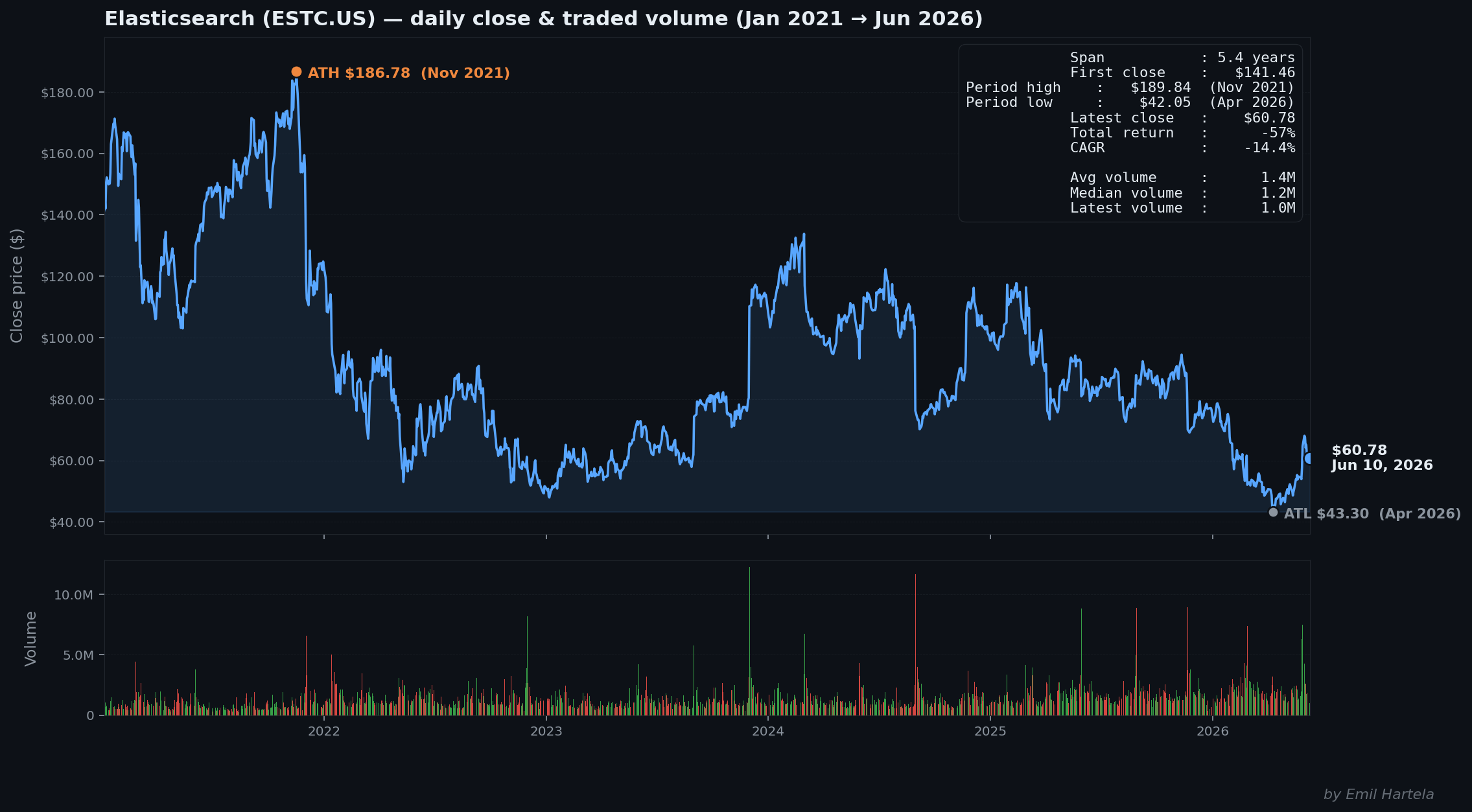
$ESTC Elasticsearch provides vector memory and Agent Builder tools that let customers construct custom agents on top of search and observability data. The market narrative positions the stock as a data foundation that benefits from AI traction yet trades well below highs. What is actually happening is that agentic workloads need reliable context retrieval and reranking; the layer that supplies those capabilities sees increased usage as agent volume grows. The profile strengthens because memory and context become central rather than peripheral. The Q4 FY2026 launch of Agent Builder and Elastic Workflows explicitly targets this requirement.
Safer anchors versus asymmetric bets
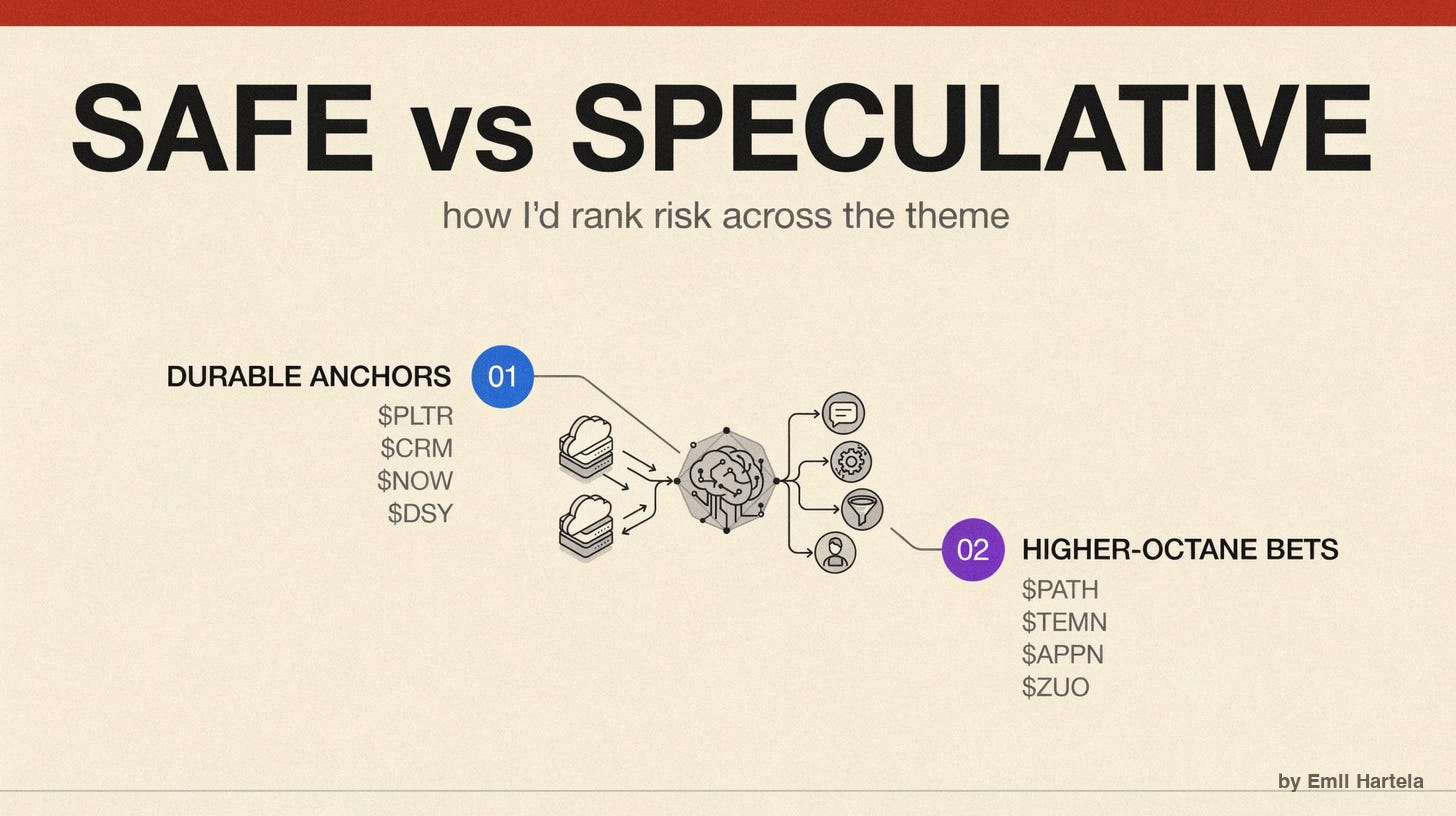
$NOW and $CRM sit on the durable side of the risk curve. Both already operate at large scale inside regulated environments where governance requirements are non-negotiable. Agent volume expands inside platforms that customers cannot easily exit without recreating years of process history and compliance records. The valuation compression prices the opposite outcome. ServiceNow’s partnerships with infrastructure providers and Microsoft’s Entra identity layer further lock agents into these controlled environments.
$PATH and $ZUO represent higher-leverage expressions of the same shift. UiPath’s automation layer becomes the runtime for thousands of new agent workflows; Zuora’s billing engine scales directly with conversation volume. Both carry smaller current footprints than the largest orchestration platforms, so the upside depends on execution in a still-forming market. The asymmetry is larger, but so is the sensitivity to adoption timing and competitive response. The same logic applies to $PLTR and $ESTC, where persistent memory and context retrieval become non-discretionary as agent counts scale.
$PEGA, $APPN, and $TEMN occupy an intermediate position. Each owns vertical or process-specific logic that general platforms cannot replicate quickly. Their smaller scale relative to the largest names creates more operating leverage if agent adoption accelerates inside their domains, yet they still benefit from the same governance and memory requirements that protect the larger anchors. The risk curve therefore runs from the broad orchestration platforms at the low end to the specialized vertical and decisioning platforms at the higher end, with the common thread that all of them already sit inside the constraints agents cannot bypass.
The bet
The platforms that absorb agents into governed, persistent systems of record capture more value per workflow than the seat-based model ever did. Current valuations price the opposite outcome. The dislocation that erased $2 trillion in market value between January and February 2026 created the entry point. The companies that already own the controls agents cannot bypass will compound from here. The historical pattern from Adobe’s subscription transition, Microsoft’s Azure pivot, and Genesys’s cloud migration shows that the layer enforcing governance and memory expands rather than contracts when the underlying work model changes.
The asymmetry is straightforward once the mechanics are clear. The market has marked down the entire sector on the assumption that volume will migrate to new, lighter tools. The evidence from identity mandates, compliance requirements, and data gravity points the other way. Agents multiply the number of actions that must be governed and remembered. The platforms that already perform that governance and memory absorb the multiplied activity at higher switching costs and with consumption-based pricing that scales revenue rather than caps it. That gap between the priced-in fear and the mechanics of agent deployment is the opportunity.
Emil Hartela Investing is a reader-supported publication. I map bottlenecks and themes like this one; supply chains, pure plays, and the names the market hasn’t connected yet.


Disclaimer: This is my own research and opinion for informational purposes only — not financial advice, and not a recommendation to buy or sell anything. Many names here are small- and micro-cap or non-US listed, which carries elevated risk. I hold positions in some of them, so assume I am biased. Figures may contain errors or be out of date. Do your own research. DYOR. NFA.